USMLE Step 1 Recalls and Past Papers 2026
RecallsGuru’s USMLE Step 1 recalls are one bundle: recall questions for all twelve systems, each with four options and the correct answer marked, updated every 15 days from the latest student input. You read them online for 1, 3 or 6 months; see what students mean by recalls.
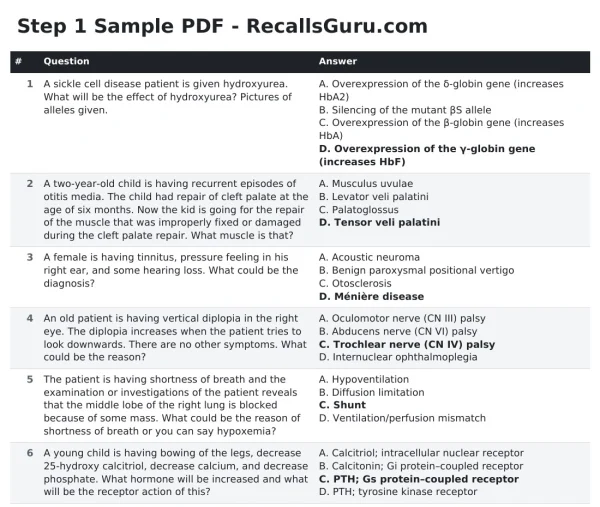
USMLE Step 1 Recalls & Past Papers
From $149.00 or try a sample for $3.00
Every Step 1 recall paper in one bundle: all twelve systems, updated every 15 days, answers marked. Read online for 1, 3 or 6 months, or try the $3 sample.
- Read online: on a phone, tablet or computer. Nothing to download.
What is in the bundle
Four papers so far, 635 questions in all: 15 September (158 questions), 28 September (159), 1 October (159) and 15 October 2026 (159). Every 15 days a new paper is added and appears in your account automatically, with an email to tell you.
- Twelve systems: cardiovascular, respiratory, renal, gastrointestinal, neurology and psychiatry, endocrine and reproductive, musculoskeletal and dermatology, hematology and oncology, microbiology and immunology, biochemistry and genetics, pharmacology and biostatistics and ethics.
Not sure yet? The $3 sample gives you the first 20 questions of the latest paper to keep.
Step 1 cardiovascular questions
The heart and vessels from embryology to drugs, with weight on murmurs, pressure tracings and antiarrhythmics.
Topics covered
Embryology and anatomy
- Heart tube derivatives, septation defects, fetal circulation and its remnants
- Coronary artery territories and dominance
- Congenital disease: tetralogy of Fallot, transposition, truncus arteriosus, VSD, ASD, PDA, coarctation
Physiology
- Cardiac output, preload, afterload and the Frank-Starling curve
- Pressure-volume loops and how valve disease changes them
- Cardiac cycle, jugular venous waveform, heart sounds and splitting
- Myocyte and pacemaker action potentials
- ECG intervals, axis, atrioventricular blocks, baroreceptor and chemoreceptor reflexes
- Capillary fluid exchange and the causes of edema
Pathology
- Atherosclerosis, stable and unstable angina, myocardial infarction timeline and complications
- Heart failure, dilated, hypertrophic and restrictive cardiomyopathy
- Murmurs and the effect of maneuvers such as Valsalva and handgrip
- Rheumatic fever, infective endocarditis, myocarditis, pericarditis and tamponade
- Aortic dissection and aneurysm, hypertension and its secondary causes
- Vasculitides: giant cell arteritis, Takayasu, polyarteritis nodosa, Kawasaki disease, granulomatosis with polyangiitis
- Cardiac tumors: myxoma and rhabdomyoma
- Shock types and their hemodynamic profiles
Pharmacology
- Antihypertensives: ACE inhibitors, ARBs, calcium channel blockers, beta blockers, hydralazine
- Antianginals and nitrates, heart failure drugs including digoxin and sacubitril
- Antiarrhythmics classes I to IV, adenosine, magnesium
- Lipid-lowering drugs: statins, ezetimibe, fibrates, PCSK9 inhibitors, niacin
Step 1 respiratory questions
Lungs, airways and pleura, with weight on gas exchange calculations, spirometry and patterns of lung disease.
Topics covered
Embryology and anatomy
- Stages of lung development and surfactant production by type II pneumocytes
- Tracheoesophageal fistula, congenital diaphragmatic hernia, pulmonary hypoplasia
- Conducting and respiratory zones, bronchopulmonary segments, aspiration sites by body position
- Structures passing through the diaphragm
Physiology
- Lung volumes and capacities, dead space, alveolar ventilation
- Compliance, elastic recoil, airway resistance
- The alveolar gas equation and the A-a gradient
- Five causes of hypoxemia and how to tell them apart
- V/Q ratios from apex to base, shunt against dead space
- Oxygen-hemoglobin dissociation curve, carbon monoxide poisoning, methemoglobinemia
- Carbon dioxide transport, response to high altitude and to exercise
Pathology
- Obstructive disease: asthma, emphysema, chronic bronchitis, bronchiectasis, alpha-1 antitrypsin deficiency
- Restrictive disease: idiopathic pulmonary fibrosis, sarcoidosis, hypersensitivity pneumonitis, pneumoconioses
- Neonatal and acute respiratory distress syndromes
- Pulmonary embolism, pulmonary hypertension, sleep apnea
- Pneumonia patterns, lung abscess, tuberculosis
- Cystic fibrosis and primary ciliary dyskinesia
- Lung cancer types with their paraneoplastic syndromes, mesothelioma, Pancoast tumor
- Pleural effusions, pneumothorax types, physical findings in each lung condition
Pharmacology
- Beta-2 agonists, muscarinic antagonists, inhaled corticosteroids
- Leukotriene modifiers, omalizumab, theophylline
- Antihistamines, decongestants, dextromethorphan, guaifenesin
- Drugs for pulmonary hypertension: bosentan, sildenafil, epoprostenol
Step 1 renal questions
Filtration, tubular transport, acid-base, electrolytes, glomerular disease and diuretics.
Topics covered
Embryology and anatomy
- Pronephros, mesonephros, metanephros; ureteric bud and metanephric mesenchyme
- Horseshoe kidney, renal agenesis and Potter sequence, posterior urethral valves, multicystic dysplastic kidney
- Course of the ureter and its relation to the uterine artery and vas deferens
- Structure of the glomerular filtration barrier and juxtaglomerular apparatus
Physiology
- Body fluid compartments and how they are measured
- Clearance, GFR, renal plasma flow, filtration fraction
- Effects of afferent and efferent arteriolar tone
- Transport in each nephron segment, glucose threshold and splay
- Renin-angiotensin-aldosterone system, ADH, ANP, PTH, erythropoietin
- Potassium shifts, and sodium, calcium, magnesium and phosphate disturbances
- Acid-base disorders, compensation rules, anion gap, renal tubular acidosis types 1, 2 and 4
Pathology
- Urinary casts and what each indicates
- Nephritic syndromes: post-streptococcal, IgA nephropathy, rapidly progressive, Alport, membranoproliferative
- Nephrotic syndromes: minimal change, focal segmental, membranous, diabetic, amyloid
- Acute kidney injury: prerenal, intrinsic and postrenal; acute tubular necrosis; interstitial nephritis
- Chronic kidney disease and renal osteodystrophy
- Kidney stones by composition
- Cystic disease: autosomal dominant and recessive polycystic kidney disease
- Urinary tract infection, pyelonephritis, renal papillary necrosis
- Tumors: renal cell carcinoma, Wilms tumor, urothelial carcinoma
- Fanconi, Bartter, Gitelman and Liddle syndromes; SIADH and diabetes insipidus
Pharmacology
- Mannitol, acetazolamide, loop diuretics, thiazides, potassium-sparing diuretics
- ACE inhibitors, ARBs, aliskiren
- SGLT2 inhibitors and vasopressin antagonists
- Nephrotoxic drugs
Step 1 gastrointestinal questions
Gut, liver, biliary tree and pancreas, including GI anatomy, gut hormones and the causes of jaundice.
Topics covered
Embryology and anatomy
- Foregut, midgut and hindgut with their arteries, nerves and referred pain
- Midgut rotation, malrotation and volvulus, omphalocele against gastroschisis
- Pyloric stenosis, duodenal atresia, Meckel diverticulum, annular pancreas, Hirschsprung disease
- Retroperitoneal organs, portosystemic anastomoses, watershed areas of the colon
- Inguinal canal, direct, indirect and femoral hernias
- Layers of the gut wall, liver lobule zones
Physiology
- Gastrin, cholecystokinin, secretin, somatostatin, GIP, motilin, VIP
- Gastric acid secretion and its control
- Pancreatic enzymes, bile acid circulation, bilirubin metabolism
- Absorption of carbohydrate, iron, folate and vitamin B12
Pathology
- Achalasia, reflux disease, Barrett esophagus, esophageal cancers, Zenker diverticulum
- Gastritis, peptic ulcer disease, Helicobacter pylori, gastric cancer
- Celiac disease, tropical sprue, Whipple disease, lactase deficiency
- Crohn disease against ulcerative colitis, diverticular disease, appendicitis, ischemic colitis
- Adenomatous polyps, familial adenomatous polyposis, Lynch syndrome, Peutz-Jeghers, colorectal cancer
- Viral hepatitis and serology, alcoholic and non-alcoholic fatty liver disease, cirrhosis and portal hypertension
- Hemochromatosis, Wilson disease, alpha-1 antitrypsin deficiency
- Gilbert, Crigler-Najjar, Dubin-Johnson and Rotor syndromes
- Gallstones, cholecystitis, cholangitis, primary biliary cholangitis, primary sclerosing cholangitis
- Acute and chronic pancreatitis, pancreatic adenocarcinoma
- Carcinoid tumor, Zollinger-Ellison syndrome, hepatocellular carcinoma
Pharmacology
- Proton pump inhibitors, H2 blockers, antacids, sucralfate, misoprostol
- Antiemetics: ondansetron, metoclopramide
- Laxatives, loperamide, octreotide
- Sulfasalazine, orlistat, ursodiol
Step 1 neurology and psychiatry questions
Neuroanatomy and lesion localisation, plus psychiatric diagnosis, its time criteria and psychopharmacology.
Topics covered
Neuroanatomy and embryology
- Neural tube defects, Chiari malformations, Dandy-Walker malformation, holoprosencephaly, syringomyelia
- Spinal tracts: dorsal column, spinothalamic, corticospinal
- Cord lesions: Brown-Sequard, anterior spinal artery occlusion, subacute combined degeneration, tabes dorsalis, ALS
- Cranial nerves and nuclei, medial and lateral medullary syndromes, pontine syndromes, Weber syndrome
- Circle of Willis and stroke by arterial territory
- Thalamic nuclei, hypothalamus, basal ganglia pathways, cerebellum, limbic system
- Visual field defects, pupillary reflexes, conjugate gaze, hearing and vestibular pathways
- CSF flow, hydrocephalus types, herniation syndromes, intracranial hemorrhages
Neuropathology
- Alzheimer, frontotemporal, Lewy body and vascular dementia; Creutzfeldt-Jakob disease
- Parkinson and Huntington disease, Wilson disease
- Multiple sclerosis, Guillain-Barre syndrome, myasthenia gravis, Lambert-Eaton syndrome
- Seizure types, headache types
- Brain tumors in adults and children
- Neurocutaneous disorders: neurofibromatosis, tuberous sclerosis, Sturge-Weber, von Hippel-Lindau
- Meningitis and encephalitis with CSF findings
Neuropharmacology
- Antiepileptics, Parkinson drugs, triptans
- Inhaled and intravenous anesthetics, local anesthetics, neuromuscular blockers
- Opioids, benzodiazepines, barbiturates
Psychiatry and behavioral science
- Schizophrenia spectrum and its time course; brief psychotic and schizophreniform disorder
- Major depression, bipolar disorder, persistent depressive disorder, grief
- Anxiety disorders, obsessive-compulsive disorder, PTSD, adjustment disorder
- Personality disorders by cluster
- Somatic symptom disorder, conversion disorder, factitious disorder, malingering
- Eating disorders; ADHD, autism spectrum disorder, Tourette syndrome
- Intoxication and withdrawal: alcohol, opioids, stimulants, benzodiazepines
- Delirium against dementia, sleep stages and sleep disorders
- Ego defense mechanisms, classical and operant conditioning
Psychopharmacology
- SSRIs, SNRIs, tricyclics, MAO inhibitors, bupropion, mirtazapine
- Typical and atypical antipsychotics and extrapyramidal effects
- Lithium, valproate, lamotrigine
- Serotonin syndrome and neuroleptic malignant syndrome
Step 1 endocrine and reproductive questions
Hormone axes and feedback in both systems: reading hormone panels and finding where an axis has failed.
Topics covered
Endocrine: embryology and physiology
- Thyroid descent, thyroglossal duct cyst, pharyngeal pouch derivatives
- Hormone signalling: cAMP, IP3, tyrosine kinase and intracellular receptors
- Hypothalamic-pituitary axes and feedback
- Insulin and glucagon actions, GLUT transporters
- Adrenal cortex zones and steroid synthesis
- Calcium, phosphate, PTH, vitamin D and calcitonin
Endocrine: pathology
- Pituitary adenomas, acromegaly, hypopituitarism, Sheehan syndrome, diabetes insipidus, SIADH
- Graves disease, Hashimoto thyroiditis, subacute thyroiditis, thyroid cancers
- Primary, secondary and tertiary hyperparathyroidism; hypoparathyroidism
- Cushing syndrome, Addison disease, Conn syndrome, pheochromocytoma, neuroblastoma
- Congenital adrenal hyperplasia: 21-hydroxylase, 11-beta-hydroxylase and 17-alpha-hydroxylase deficiency
- Type 1 and type 2 diabetes, diabetic ketoacidosis, hyperosmolar state, chronic complications
- MEN 1, MEN 2A and MEN 2B; insulinoma, glucagonoma, carcinoid syndrome
Reproductive: embryology and physiology
- Mesonephric and paramesonephric ducts, sex differentiation, genital homologues
- Spermatogenesis, the menstrual cycle, oogenesis
- hCG, placental hormones, physiological changes of pregnancy, lactation, menopause
Reproductive: pathology
- Klinefelter and Turner syndromes, androgen insensitivity, 5-alpha-reductase deficiency, Kallmann syndrome
- Polycystic ovary syndrome, endometriosis, leiomyoma, endometrial hyperplasia and carcinoma
- Ovarian tumors: epithelial, germ cell and sex cord-stromal
- Cervical dysplasia and HPV
- Ectopic pregnancy, hydatidiform mole, preeclampsia, placenta previa, placental abruption
- Fibroadenoma, ductal carcinoma in situ, invasive breast cancers
- Testicular tumors, cryptorchidism, torsion, benign prostatic hyperplasia, prostate cancer
Pharmacology
- Insulins, metformin, sulfonylureas, GLP-1 agonists, DPP-4 inhibitors, SGLT2 inhibitors, thiazolidinediones
- Levothyroxine, propylthiouracil, methimazole
- Glucocorticoids, bisphosphonates
- Estrogens, progestins, contraceptives, tamoxifen, raloxifene, aromatase inhibitors, clomiphene
- Finasteride, tamsulosin, PDE-5 inhibitors
Step 1 musculoskeletal and dermatology questions
Limb anatomy, bone, joint and muscle disease, connective tissue disease and skin lesions.
Topics covered
Anatomy
- Brachial plexus lesions: Erb palsy, Klumpke palsy, winged scapula
- Upper limb nerve injuries: axillary, radial, median, ulnar, musculocutaneous
- Rotator cuff muscles, carpal tunnel, hand deformities
- Lower limb nerves: femoral, obturator, sciatic, common peroneal, tibial, superior and inferior gluteal
- Knee ligament and meniscus injuries, dermatomes and reflex levels
- Common fracture sites and the nerve or artery at risk
Muscle and bone physiology
- Sarcomere structure, excitation-contraction coupling, muscle fiber types
- Endochondral and membranous ossification, osteoblast and osteoclast control
Bone and joint pathology
- Achondroplasia, osteogenesis imperfecta, osteopetrosis
- Osteoporosis, osteomalacia and rickets, Paget disease of bone, avascular necrosis
- Bone tumors: osteosarcoma, Ewing sarcoma, giant cell tumor, osteochondroma, chondrosarcoma
- Osteoarthritis against rheumatoid arthritis, gout, calcium pyrophosphate deposition
- Septic arthritis, osteomyelitis
- Seronegative spondyloarthropathies: ankylosing spondylitis, psoriatic arthritis, reactive arthritis
Connective tissue and muscle disease
- Systemic lupus erythematosus, Sjogren syndrome, systemic sclerosis, mixed connective tissue disease
- Autoantibodies and the disease each points to
- Polymyositis, dermatomyositis, polymyalgia rheumatica, fibromyalgia
- Duchenne, Becker and myotonic dystrophy
- Marfan and Ehlers-Danlos syndromes
Dermatology
- Skin layers and epidermal cell junctions; terms such as macule, papule, vesicle, acanthosis
- Atopic and contact dermatitis, psoriasis, seborrheic dermatitis, lichen planus
- Pemphigus vulgaris against bullous pemphigoid, dermatitis herpetiformis
- Stevens-Johnson syndrome, erythema multiforme, erythema nodosum
- Impetigo, cellulitis, necrotizing fasciitis, dermatophyte infections, viral exanthems
- Actinic keratosis, basal cell carcinoma, squamous cell carcinoma, melanoma
- Vitiligo, albinism, burn classification
Pharmacology
- NSAIDs, aspirin, acetaminophen, celecoxib
- Allopurinol, febuxostat, colchicine, probenecid
- Methotrexate, TNF-alpha inhibitors, bisphosphonates, teriparatide
- Topical and oral retinoids
Step 1 hematology and oncology questions
Red cells, white cells, platelets and clotting, with oncology principles, leukemia and lymphoma markers and cancer drugs.
Topics covered
Physiology
- Sites of hematopoiesis through fetal life, hemoglobin types and switching
- Heme synthesis, iron absorption and transport, hepcidin
- Primary hemostasis, the coagulation cascade, fibrinolysis, natural anticoagulants
- ABO and Rh groups, hemolytic disease of the newborn, transfusion reactions
Red cell pathology
- Microcytic: iron deficiency, alpha and beta thalassemia, lead poisoning, sideroblastic anemia
- Macrocytic: folate and vitamin B12 deficiency, orotic aciduria
- Normocytic: anemia of chronic disease, aplastic anemia
- Hemolytic: hereditary spherocytosis, G6PD deficiency, pyruvate kinase deficiency, sickle cell disease, paroxysmal nocturnal hemoglobinuria, warm and cold autoimmune hemolysis, microangiopathic anemia
- Porphyrias: acute intermittent porphyria, porphyria cutanea tarda
- Smear findings: schistocytes, target cells, Howell-Jolly bodies, Heinz bodies, basophilic stippling
Bleeding and clotting
- Hemophilia A and B, vitamin K deficiency, von Willebrand disease
- Immune thrombocytopenia, TTP, hemolytic uremic syndrome, Bernard-Soulier, Glanzmann
- Disseminated intravascular coagulation
- Factor V Leiden, prothrombin mutation, antithrombin, protein C and S deficiency
- Heparin-induced thrombocytopenia
White cell and lymphoid neoplasms
- ALL, AML and acute promyelocytic leukemia, CML, CLL, hairy cell leukemia
- Hodgkin lymphoma; Burkitt, follicular, mantle cell and diffuse large B-cell lymphoma with their translocations
- Multiple myeloma, MGUS, Waldenstrom macroglobulinemia
- Polycythemia vera, essential thrombocythemia, myelofibrosis, JAK2
- Langerhans cell histiocytosis
Oncology principles
- Oncogenes and tumor suppressor genes, hallmarks of cancer
- Chemical carcinogens, oncogenic microbes, tumor markers
- Paraneoplastic syndromes, tumor lysis syndrome, grade against stage
Pharmacology
- Heparin, warfarin, direct thrombin and factor Xa inhibitors, reversal agents
- Aspirin, clopidogrel, glycoprotein IIb/IIIa inhibitors, thrombolytics
- Antimetabolites, alkylating agents, anthracyclines, platinum drugs, vinca alkaloids, taxanes, topoisomerase inhibitors
- Named toxicities: doxorubicin, bleomycin, cisplatin, cyclophosphamide, vincristine
- Imatinib, rituximab, trastuzumab, hydroxyurea
Step 1 microbiology and immunology questions
Each case starts from a patient and asks for the organism, its virulence factor, the drug or the immune defect.
Topics covered
Bacteriology
- Cell wall structure, Gram and acid-fast staining, culture media, bacterial genetics
- Exotoxins and endotoxin, with mechanisms
- Gram-positive cocci: staphylococci, streptococci, enterococci
- Gram-positive rods: Clostridium, Bacillus, Listeria, Corynebacterium
- Gram-negative cocci and rods: Neisseria, Haemophilus, Pseudomonas, Legionella, Bordetella, the Enterobacteriaceae, Vibrio, Helicobacter, Campylobacter
- Spirochetes: Treponema, Borrelia, Leptospira
- Mycobacteria, Mycoplasma, Chlamydia, Rickettsia and other zoonoses
Virology
- DNA and RNA virus families, enveloped against naked, segmented genomes
- Herpesviruses, hepatitis viruses, HIV structure and life cycle
- Influenza drift and shift, measles, mumps, rubella, rotavirus, rabies, HPV, polio, arboviruses
- Prions
Mycology and parasitology
- Candida, Aspergillus, Cryptococcus, Mucor, Pneumocystis
- Endemic mycoses: Histoplasma, Blastomyces, Coccidioides
- Protozoa: Plasmodium, Toxoplasma, Giardia, Entamoeba, Trypanosoma, Leishmania
- Helminths: nematodes, cestodes, trematodes
Clinical microbiology
- Common causes of pneumonia, meningitis, urinary infection and endocarditis by age and setting
- Sexually transmitted infections, TORCH infections, food poisoning by timing
- Infections in asplenic, neutropenic and HIV-positive patients by CD4 count
Antimicrobials
- Penicillins, cephalosporins, carbapenems, vancomycin
- Aminoglycosides, tetracyclines, macrolides, clindamycin, linezolid
- Fluoroquinolones, sulfonamides, metronidazole
- Antituberculous drugs, antifungals, antivirals, antiretrovirals, antimalarials, anthelmintics
- Resistance mechanisms
Immunology
- Lymph node and spleen structure, innate and adaptive immunity
- MHC class I and II, HLA associations
- T-cell and B-cell development, positive and negative selection
- Antibody classes, class switching, complement pathways, cytokines
- Hypersensitivity types I to IV
- Hyperacute, acute and chronic transplant rejection, graft-versus-host disease
- Immunodeficiencies: Bruton agammaglobulinemia, common variable immunodeficiency, IgA deficiency, DiGeorge syndrome, SCID, Wiskott-Aldrich, hyper-IgM, chronic granulomatous disease, leukocyte adhesion deficiency, Chediak-Higashi
- Vaccine types, passive against active immunity
- Immunosuppressants: cyclosporine, tacrolimus, sirolimus, mycophenolate, azathioprine
Step 1 biochemistry and genetics questions
Pathways, metabolic disease, vitamins and inheritance as patient cases: an enzyme to identify, a pedigree to read, a risk to calculate.
Topics covered
Molecular biology
- DNA structure, replication and repair defects: xeroderma pigmentosum, Lynch syndrome, ataxia-telangiectasia
- Transcription, splicing, translation and post-translational modification
- Mutation types: missense, nonsense, frameshift, splice site
- Laboratory methods: PCR, blotting techniques, ELISA, karyotype, FISH, CRISPR
Cell biology
- Cell cycle checkpoints, cyclins, p53 and Rb
- Protein trafficking and I-cell disease
- Cytoskeleton, microtubule motors, cilia structure
- Collagen synthesis and its disorders, elastin
Metabolism
- Glycolysis, gluconeogenesis, TCA cycle, electron transport and its inhibitors
- Pentose phosphate pathway and G6PD deficiency
- Glycogen storage diseases: von Gierke, Pompe, Cori, McArdle
- Fructose and galactose disorders
- Fatty acid oxidation, MCAD deficiency, carnitine deficiency, ketone bodies
- Cholesterol synthesis, lipoproteins, familial dyslipidemias
- Urea cycle, ornithine transcarbamylase deficiency, hyperammonemia
- Amino acid disorders: phenylketonuria, maple syrup urine disease, homocystinuria, alkaptonuria, cystinuria
- Purine and pyrimidine pathways: Lesch-Nyhan syndrome, adenosine deaminase deficiency
- Lysosomal storage diseases: Tay-Sachs, Gaucher, Niemann-Pick, Fabry, Krabbe, Hurler, Hunter
- Fed, fasting and starvation states
Nutrition
- Fat-soluble vitamins A, D, E and K
- Water-soluble vitamins: B1, B2, B3, B5, B6, B7, B9, B12 and C, with deficiency syndromes
- Zinc deficiency, kwashiorkor and marasmus, ethanol metabolism
Genetics
- Autosomal dominant, autosomal recessive, X-linked and mitochondrial inheritance
- Penetrance, expressivity, pleiotropy, anticipation, mosaicism, heteroplasmy
- Imprinting and uniparental disomy: Prader-Willi and Angelman syndromes
- Trinucleotide repeat diseases: Huntington, fragile X, myotonic dystrophy, Friedreich ataxia
- Trisomies 21, 18 and 13, Robertsonian translocation
- Microdeletions: 22q11, Williams syndrome, cri-du-chat
- Hardy-Weinberg equilibrium, linkage disequilibrium, pedigree risk calculation
Step 1 pharmacology questions
Kinetics, autonomic drugs, toxicities and antidotes, and the major drug classes across all systems.
Topics covered
Pharmacokinetics
- Bioavailability, volume of distribution, clearance, half-life
- Loading and maintenance dose calculations, steady state
- Zero-order against first-order elimination
- Phase I and phase II metabolism, slow and fast acetylators
- Cytochrome P450 inducers, inhibitors and substrates
- Ion trapping and urine pH
Pharmacodynamics
- Efficacy and potency, competitive and non-competitive antagonists, partial agonists
- Therapeutic index, tolerance and tachyphylaxis
- Receptor types: Gq, Gs, Gi, ion channel, enzyme-linked
Autonomic drugs
- Direct cholinergic agonists, acetylcholinesterase inhibitors, organophosphate poisoning
- Muscarinic antagonists and atropine toxicity
- Alpha and beta agonists: epinephrine, norepinephrine, phenylephrine, dobutamine, isoproterenol
- Alpha blockers and beta blockers, with selectivity
- Blood pressure and heart rate tracings after drug combinations
Toxicities and antidotes
- Acetaminophen, salicylates, opioids, benzodiazepines, tricyclic antidepressants
- Iron, lead, arsenic, cyanide, carbon monoxide, methanol and ethylene glycol
- Digoxin, heparin, warfarin, beta blocker overdose
- Drug reactions by organ: QT prolongation, agranulocytosis, drug-induced lupus, hepatotoxicity, nephrotoxicity, ototoxicity, pulmonary fibrosis, photosensitivity, gynecomastia, disulfiram-like reaction
- Teratogens: ACE inhibitors, warfarin, isotretinoin, valproate, lithium, phenytoin, thalidomide
Drug classes by system
- Cardiovascular: antihypertensives, antiarrhythmics, lipid drugs
- CNS: antiepileptics, anesthetics, opioids, antidepressants, antipsychotics
- Endocrine: diabetes drugs, thyroid drugs, steroids
- Anti-inflammatory: NSAIDs, gout drugs, biologic agents and their targets
- Anticoagulants, antiplatelets and chemotherapy
- Drug name suffixes and what they signal
Step 1 biostatistics and ethics questions
Calculations and interpretation in biostatistics and epidemiology, and ethics cases that ask what the doctor should do next.
Topics covered
Test characteristics
- Sensitivity, specificity, positive and negative predictive value
- Likelihood ratios, effect of prevalence, moving a cutoff, ROC curves
- Accuracy against precision
Measures of risk
- Incidence and prevalence
- Relative risk, odds ratio, attributable risk
- Absolute and relative risk reduction, number needed to treat and to harm
- Case fatality and mortality rates
Study design
- Case series, cross-sectional, case-control, cohort, randomized controlled and crossover trials
- Clinical trial phases, meta-analysis
- Blinding, randomization, intention-to-treat analysis
Bias and validity
- Selection, recall, measurement, observer, lead-time and length-time bias
- Confounding against effect modification
- Hawthorne effect, internal and external validity
Statistics
- Mean, median, mode; normal and skewed distributions
- Standard deviation against standard error
- Null hypothesis, type I and type II error, power, p-values
- Confidence intervals and how to read them
- t-test, ANOVA, chi-square, correlation coefficient
- Kaplan-Meier curves and hazard ratios
Public health
- Primary, secondary and tertiary prevention
- Screening principles, common causes of death by age group
- Medicare and Medicaid basics
Ethics and law
- Autonomy, beneficence, non-maleficence, justice
- Informed consent and its exceptions, decision-making capacity
- Minors, emancipation, parental refusal of treatment
- Confidentiality and when it may be broken, mandatory reporting
- Advance directives, surrogate order, brain death, withdrawal of care
- Medical error disclosure, impaired colleagues, gifts and conflicts of interest
Communication and patient safety
- Delivering bad news, working with interpreters, motivational interviewing
- Responding to an angry or non-adherent patient
- Swiss cheese model, root cause analysis, near misses, handoffs
- Quality measures: structure, process, outcome
How the questions are written
- In the exam’s format. A short clinical case and one best answer, the same style as the free sample questions on usmle.org. Concepts repeat on Step 1 because it is built from a published content outline, and each set covers those concepts in several different cases.
- Mapped to the outline. Every question is tagged to a system and discipline in the Step 1 content outline, and each set follows its weighting.
- Answers marked. Each question shows four options with the correct one in bold.
- Named author and reviewer. Each paper shows who wrote it, who reviewed it and when, unlike the anonymous files shared on Reddit and Telegram. We correct mistakes readers report.
How to use it
- Content phase: finish a system in your main resource, then do its set the same week.
- Question phase: take an NBME self-assessment, check it in the NBME score calculator and redo the sets for your weakest systems.
- Final weeks: redo the questions you got wrong and read each 15-day update as it arrives.
The week-by-week plan is in the Step 1 study schedule.
How access works
- Choose 1, 3 or 6 months and enter your email; your account is created at this step.
- Pay by card or crypto and the papers open at once. Bank transfers open when we confirm them.
- Read online on a phone, tablet or computer, on one device at a time. There is no PDF download, and each page carries your details as a watermark.
All sales are final: see the Refund Policy.
Questions people ask
How many questions are in the bundle?
635 in the four papers released so far, with a new paper every 15 days.
Can I buy one system on its own?
No. Every block of the exam mixes all systems, so Step 1 is sold as one bundle. Each system is still its own paper inside it.
How long should my access be?
Long enough to reach your exam date. If it is more than three months away, 6 months leaves room for the date to move.
Is this enough on its own?
No single source is. Use it with your main resource and NBME’s official practice tests.
Do you have the other Steps?
Yes: Step 2 CK recalls, Step 3 recalls and Step 3 CCS cases, or all of them in the All Steps bundle.