USMLE Step 2 CK Recalls and Past Papers 2026
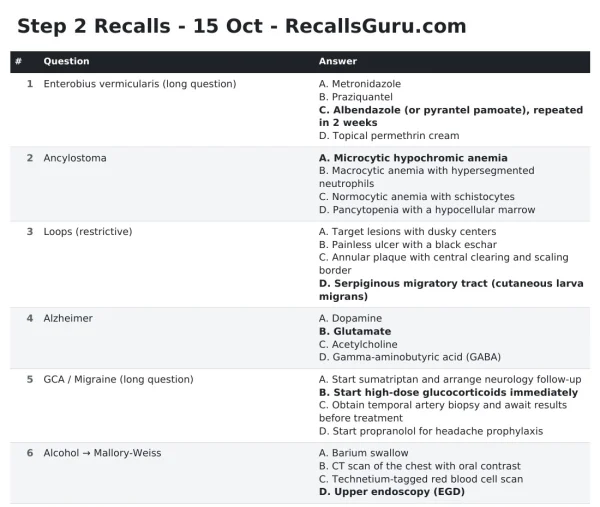
RecallsGuru’s USMLE Step 2 CK recalls are one bundle: clinical recall questions across six disciplines, each with four options and the correct answer marked, updated every 15 days. Questions ask what Step 2 CK asks: the likely diagnosis, the next best step and the right treatment. You read them online for 1, 3 or 6 months; see what students mean by recalls.
USMLE Step 2 CK Recalls & Past Papers
From $179.00 or try a sample for $3.00
Every Step 2 CK recall paper in one bundle: all six disciplines, updated every 15 days, answers marked. Read online for 1, 3 or 6 months, or try the $3 sample.
- Read online: on a phone, tablet or computer. Nothing to download.
What is in the bundle
Every 15 days a new paper is added and appears in your account automatically, with an email to tell you. The first paper, 15 October 2026, has 166 questions.
- Six disciplines: internal medicine, surgery, pediatrics, obstetrics and gynecology, psychiatry and biostatistics, ethics and patient safety.
Not sure yet? The $3 sample gives you the first 20 questions of the latest paper to keep.
Step 2 CK internal medicine questions
Questions on adult medicine, the largest part of the exam: 55 to 65 percent of questions in the content outline on usmle.org (checked October 2026). Most students start here.
Topics covered
Cardiovascular
- Acute coronary syndrome: ECG changes, timing of catheterisation, drugs after a myocardial infarction
- Heart failure with reduced and preserved ejection fraction
- Atrial fibrillation, supraventricular tachycardia, heart block, syncope work-up
- Valve disease by murmur, infective endocarditis, pericarditis and tamponade
- Hypertension, hypertensive emergency, aortic dissection, peripheral artery disease
Pulmonary
- Asthma and COPD exacerbations, oxygen therapy
- Community-acquired and hospital-acquired pneumonia, tuberculosis testing
- Pulmonary embolism, pleural effusion analysis, lung nodule follow-up, sleep apnea
Renal and electrolytes
- Prerenal, intrinsic and postrenal acute kidney injury
- Nephritic and nephrotic syndromes, chronic kidney disease complications
- Hyponatremia, hyperkalemia, hypercalcemia, acid-base interpretation
Gastroenterology and hepatology
- Peptic ulcer disease, GI bleeding, inflammatory bowel disease, celiac disease
- Viral hepatitis serology, cirrhosis, ascites, spontaneous bacterial peritonitis
- Pancreatitis, colon cancer screening
Endocrine
- Type 1 and type 2 diabetes management, DKA, hypoglycemia
- Thyroid nodules, hyper- and hypothyroidism, Cushing syndrome, adrenal insufficiency, pheochromocytoma, osteoporosis
Hematology and oncology
- Iron deficiency, B12 deficiency, hemolytic anemia, sickle cell crisis
- Thrombocytopenia, anticoagulation, leukemias and lymphomas, tumor lysis syndrome
Infectious disease
- Sepsis, meningitis, urinary tract infection, cellulitis, osteomyelitis
- HIV testing, treatment start and prophylaxis; sexually transmitted infections
Rheumatology
- Rheumatoid arthritis, lupus, gout and pseudogout, giant cell arteritis, septic joint
Neurology
- Ischemic and hemorrhagic stroke, transient ischemic attack, seizure, headache types, Guillain-Barre syndrome, myasthenia gravis
Preventive and geriatric medicine
- Adult screening and vaccines, falls, dementia, polypharmacy
Step 2 CK surgery questions
Who needs an operation, who needs a scan first and who can be watched: trauma, the acute abdomen and care before and after surgery.
Topics covered
Trauma
- Primary survey: airway, breathing, circulation, disability, exposure
- Tension pneumothorax, hemothorax, flail chest, cardiac tamponade, aortic injury
- Blunt and penetrating abdominal trauma: FAST scan, CT or laparotomy
- Pelvic fracture, urethral injury, head injury, epidural and subdural hematoma, spinal cord injury
Shock, burns and critical care
- Hypovolemic, cardiogenic, septic and neurogenic shock
- Burn depth, surface area, fluid resuscitation, inhalation injury
- Compartment syndrome, electrolytes and fluids in the surgical patient
General surgery
- Appendicitis, cholecystitis, choledocholithiasis, cholangitis, gallstone pancreatitis
- Small and large bowel obstruction, volvulus, perforated ulcer, mesenteric ischemia
- Diverticulitis, colorectal cancer, anorectal disease
- Inguinal, femoral and incisional hernias
- Breast mass work-up by age, thyroid nodule, esophageal perforation
Vascular surgery
- Abdominal aortic aneurysm screening and rupture
- Acute limb ischemia, claudication, carotid stenosis, deep vein thrombosis
Perioperative care
- Preoperative cardiac and pulmonary risk, which drugs to stop before surgery
- Postoperative fever by day: atelectasis, urinary infection, wound infection, thrombosis, drug fever
- Wound dehiscence, anastomotic leak, ileus, malignant hyperthermia
Surgical subspecialties
- Urology: kidney stones, testicular torsion, hematuria, prostate disease
- Orthopedics: hip fracture, common fracture patterns, septic arthritis, cauda equina syndrome
- Ear, nose and throat, ophthalmic and neurosurgical emergencies
Pediatric surgery
- Pyloric stenosis, intussusception, malrotation with volvulus, Hirschsprung disease, congenital diaphragmatic hernia
Step 2 CK pediatrics questions
Questions from birth to adolescence, the second-largest part of the outline (17 to 27 percent). The same symptom means different things at two weeks, two years and twelve years.
Topics covered
The newborn
- Apgar score, neonatal resuscitation, birth injuries
- Respiratory distress syndrome, transient tachypnea, meconium aspiration
- Physiologic and pathologic jaundice, when to start phototherapy
- Neonatal sepsis, TORCH infections, hypoglycemia, newborn screening
- Bilious vomiting, necrotizing enterocolitis, tracheoesophageal fistula
Growth, development and prevention
- Gross motor, fine motor, language and social milestones
- Failure to thrive, short stature, puberty that is early or late
- Vaccine schedule and contraindications, lead and anemia screening, car seat and safe sleep advice
Infectious disease
- Fever in the infant under 60 days
- Otitis media, pharyngitis, croup, epiglottitis, bronchiolitis, pneumonia, pertussis
- Meningitis, urinary tract infection, rashes of childhood, Kawasaki disease
Cardiology
- Ventricular and atrial septal defects, patent ductus arteriosus, coarctation
- Tetralogy of Fallot, transposition, innocent murmurs
Respiratory and allergy
- Asthma classification and treatment, cystic fibrosis, foreign body aspiration, anaphylaxis
Gastroenterology
- Pyloric stenosis, intussusception, Meckel diverticulum, gastroenteritis and dehydration, constipation, celiac disease
Renal and endocrine
- Vesicoureteral reflux, nephrotic syndrome, post-streptococcal glomerulonephritis, hemolytic uremic syndrome
- Type 1 diabetes and DKA, congenital adrenal hyperplasia, congenital hypothyroidism
Hematology and oncology
- Iron deficiency, sickle cell disease, immune thrombocytopenia, hemophilia
- Leukemia, Wilms tumor, neuroblastoma
Neurology and genetics
- Febrile seizure, infantile spasms, cerebral palsy, muscular dystrophy
- Down, Turner, fragile X and other common syndromes
Orthopedics
- Developmental hip dysplasia, slipped capital femoral epiphysis, Legg-Calve-Perthes disease, limp
Adolescent medicine and child protection
- Confidentiality and consent for minors, eating disorders, signs of abuse and the duty to report
Step 2 CK obstetrics and gynecology questions
Questions in an obstetrics half and a gynecology half. Management often turns on the exact week of pregnancy.
Topics covered
Normal pregnancy and prenatal care
- Dating a pregnancy, first-visit laboratory tests, aneuploidy screening
- Glucose testing, Rh immunoglobulin, group B streptococcus screening, vaccines in pregnancy
- Drugs that are unsafe in pregnancy
Complications of pregnancy
- Gestational hypertension, preeclampsia, eclampsia, HELLP syndrome
- Gestational diabetes, hyperemesis, cholestasis of pregnancy, acute fatty liver
- Ectopic pregnancy, miscarriage types, molar pregnancy
- Placenta previa, placental abruption, vasa previa
- Preterm labor, premature rupture of membranes, cervical insufficiency
- Multiple gestation, fetal growth restriction, Rh alloimmunization
Labor and delivery
- Stages of labor, arrest and protraction, induction
- Fetal heart rate patterns: early, late and variable decelerations
- Shoulder dystocia, cord prolapse, breech presentation, operative delivery, chorioamnionitis
Postpartum
- Postpartum hemorrhage causes and stepwise treatment
- Endometritis, mastitis, breastfeeding, postpartum mood disorders, postpartum contraception
Gynecology
- Primary and secondary amenorrhea, polycystic ovary syndrome
- Abnormal uterine bleeding, fibroids, endometriosis, adenomyosis
- Vaginitis, cervicitis, pelvic inflammatory disease
- Contraception methods and contraindications, emergency contraception
- Infertility work-up, menopause and hormone therapy
- Pelvic organ prolapse, types of urinary incontinence
Gynecologic oncology and breast
- Cervical screening intervals and management of abnormal results
- Postmenopausal bleeding and endometrial cancer, ovarian masses, vulvar lesions
- Breast mass, nipple discharge, breast cancer screening
Step 2 CK psychiatry questions
Questions on diagnosis, first-line treatment and adverse effects, where one detail often decides the answer: how long symptoms have lasted, or which drug was started last week.
Topics covered
Mood disorders
- Major depression, persistent depressive disorder, adjustment disorder, normal grief
- Bipolar I and II, cyclothymia, mania caused by drugs
- Choice of antidepressant, lithium monitoring, electroconvulsive therapy
Psychotic disorders
- Brief psychotic disorder, schizophreniform disorder, schizophrenia, schizoaffective disorder, delusional disorder
- First- and second-generation antipsychotics, clozapine monitoring
Anxiety, trauma and obsessive-compulsive disorders
- Generalized anxiety, panic disorder, social anxiety, specific phobia
- Acute stress disorder and post-traumatic stress disorder
- Obsessive-compulsive disorder, body dysmorphic disorder
Substance use
- Intoxication and withdrawal: alcohol, opioids, benzodiazepines, stimulants, cannabis, hallucinogens
- Delirium tremens, Wernicke encephalopathy
- Drugs for alcohol and opioid use disorder, smoking cessation
Neurocognitive disorders
- Delirium against dementia, Alzheimer disease, vascular, Lewy body and frontotemporal dementia
- Depression that looks like dementia in older adults
Somatic symptom and related disorders
- Somatic symptom disorder, illness anxiety disorder, conversion disorder, factitious disorder, malingering
Eating, sleep and sexual disorders
- Anorexia nervosa, bulimia nervosa, binge eating, refeeding syndrome
- Insomnia, narcolepsy, parasomnias
Child and adolescent psychiatry
- ADHD, autism spectrum disorder, oppositional defiant and conduct disorder, tic disorders, separation anxiety, enuresis
Personality disorders, emergencies and law
- Clusters A, B and C
- Suicide risk assessment, the agitated patient, involuntary admission, duty to protect, decision-making capacity
Adverse drug effects
- Acute dystonia, akathisia, tardive dyskinesia, neuroleptic malignant syndrome
- Serotonin syndrome, hypertensive crisis with MAO inhibitors, lithium toxicity, tricyclic overdose, metabolic syndrome
Step 2 CK biostatistics, ethics and patient safety questions
Questions on 2×2 tables, consent, professionalism and medical error. They appear in every block and are quick marks once you know the patterns, so do not leave them to the last week.
Topics covered
Biostatistics
- Sensitivity, specificity, positive and negative predictive value, likelihood ratios
- How prevalence changes predictive values; moving a test cut-off
- Relative risk, odds ratio, attributable risk, absolute risk reduction, number needed to treat and to harm
- Incidence and prevalence, mortality and case-fatality rates
- Mean, median, mode, standard deviation, normal and skewed distributions
- Null hypothesis, p-value, confidence interval, type I and type II error, power
- Choosing a test: t-test, ANOVA, chi-square, correlation
Study design and interpretation of the literature
- Cohort, case-control, cross-sectional, randomized trial, crossover trial, meta-analysis
- Selection, recall, observer, lead-time and length-time bias; confounding and effect modification
- Randomization, blinding, intention-to-treat analysis
- Kaplan-Meier curves, hazard ratios, forest plots
- Reading a research abstract and judging its conclusion
Ethics and law
- Informed consent and its exceptions, decision-making capacity
- Advance directives, surrogate decision-makers, do-not-resuscitate orders
- Minors: consent, emancipation, care a minor can agree to alone
- Confidentiality and when it can be broken; mandatory reporting
- Brain death, organ donation, withdrawing treatment, requests the doctor cannot agree to
Professionalism and communication
- Giving bad news, working with interpreters, the angry or non-adherent patient
- Gifts, conflicts of interest, the impaired colleague, boundaries with patients
- Disclosing an error to the patient
Patient safety and quality improvement
- Active and latent errors, near misses, sentinel events
- Root cause analysis, failure mode and effects analysis, the Swiss cheese model
- Plan-do-study-act cycles, checklists, time-outs, medication reconciliation
- Handoffs and transitions of care, hospital-acquired infections, just culture
Population health
- Primary, secondary and tertiary prevention, screening principles, outbreak investigation, health disparities
How the questions are written
- Decision questions. A full history, examination and results, as on the exam, then the diagnosis, next step or treatment.
- Current US guidelines. When a guideline changes we update the question and its review date, so you do not learn outdated management from an old file shared on Reddit or Telegram.
- Answers marked: each question shows four options with the correct one in bold.
- Named author and reviewer on every paper. We correct mistakes readers report.
How to use it
- During each clerkship: do that discipline’s set while you are on the rotation. The sets also cover much of the clerkship subject exams.
- Dedicated study: take an NBME self-assessment, check it in the NBME score calculator, then work through your weakest disciplines.
- Last two weeks: redo the questions you got wrong.
How access works
- Choose 1, 3 or 6 months and enter your email; your account is created at this step.
- Pay by card or crypto and the papers open at once. Bank transfers open when we confirm them.
- Read online on a phone, tablet or computer, on one device at a time. There is no PDF download, and each page carries your details as a watermark.
All sales are final: see the Refund Policy.
Questions people ask
How many questions are in the bundle?
166 in the first paper (15 October 2026), with a new paper every 15 days.
Can I buy one discipline on its own?
No. Every block of the exam mixes all disciplines, so Step 2 CK is sold as one bundle. Each discipline is still its own paper inside it.
Should I start here if I have not taken Step 1?
No. Start with the Step 1 recalls.
Do you have Step 3?
Yes: Step 3 recalls and Step 3 CCS cases, or all three Steps in the All Steps bundle.